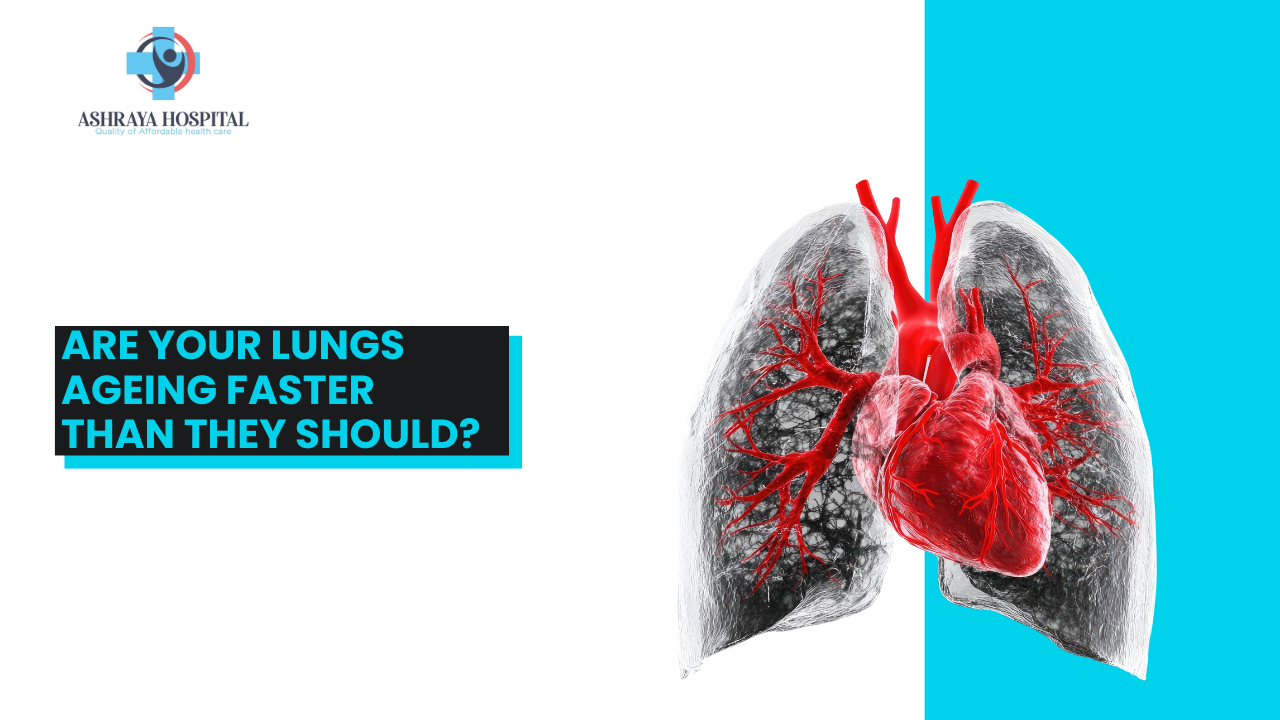
Breathing is an automatic process that most of us rarely pay attention to. We inhale and exhale thousands of times a day without conscious effort, assuming our lungs will continue to function efficiently for life. However, lung health is not guaranteed. For many people today, lungs are ageing faster than they should, often without obvious early symptoms.
Lung ageing refers to the gradual decline in lung capacity, elasticity, and efficiency. While some reduction is expected with advancing age, modern environmental and lifestyle factors are accelerating this process. Pollution, smoking exposure, untreated respiratory conditions, and repeated infections are placing continuous stress on the lungs. Over time, this leads to reduced oxygen delivery, breathlessness, fatigue, and increased vulnerability to illness.
Understanding lung ageing early is essential. With timely awareness, testing, and preventive care, lung damage can be slowed, and quality of life preserved well into later years.
Lungs work by expanding and contracting, allowing oxygen to enter the bloodstream and carbon dioxide to exit the body. Healthy lung tissue is elastic and flexible, enabling smooth airflow. As lungs age, this elasticity gradually reduces, airways may narrow, and oxygen exchange becomes less efficient.
Natural lung ageing occurs slowly over decades. Accelerated lung ageing happens when harmful exposures or medical conditions speed up this decline. Reduced lung efficiency not only affects breathing. It impacts stamina, immunity, sleep quality, mental clarity, and overall energy levels.
People often associate lung problems only with smokers or elderly individuals. In reality, accelerated lung ageing is now being seen in younger adults due to environmental exposure and lifestyle habits.
Modern lifestyles expose lungs to continuous stress. Several factors contribute to early lung decline.
Environmental Factors
Lifestyle Related Factors
Medical Factors
Together, these factors reduce lung resilience and accelerate ageing far beyond what is expected for a person’s age.
Early lung ageing rarely causes dramatic symptoms. Instead, subtle signs develop gradually and are often dismissed.
Common warning signs include:
Sleep-related symptoms may also appear:
Ignoring these signs allows lung damage to progress silently, making early intervention crucial.
Asthma, when poorly controlled, causes long-term inflammation of the airways. Over time, this leads to airway thickening and reduced airflow, accelerating lung ageing even in younger individuals. Chronic Obstructive Pulmonary Disease causes progressive and often irreversible damage to lung tissue. Early detection is crucial to slow progression.
Sleep disorders such as sleep apnoea reduce oxygen levels repeatedly during sleep, placing strain on both lungs and the cardiovascular system. When respiratory conditions overlap, the impact multiplies. Untreated sleep disorders combined with asthma or COPD significantly accelerate lung decline and increase the risk of complications.
A lung health test assesses how well the lungs move air in and out and how efficiently oxygen is exchanged. Many people with early lung damage feel normal at rest and are unaware of declining lung capacity. Routine lung function testing is particularly important for individuals exposed to pollution, smokers and former smokers, those with frequent respiratory infections, or people with a family history of lung disease.
Early detection allows preventive strategies to be implemented before symptoms worsen. Testing shifts care from reactive treatment to proactive protection.
Protecting lung health requires a combination of lifestyle changes and medical care.
Lifestyle Measures
Medical Measures
Preventive care focuses on preserving lung function rather than waiting for symptoms to worsen.
A pulmonologist should be consulted if breathlessness, cough, wheezing, or chest discomfort persists or worsens. Individuals with occupational exposure to dust or chemicals, smokers, or those with recurrent respiratory infections benefit from specialist evaluation even without severe symptoms.
Pulmonologists focus on early detection, preventive strategies, and personalised care plans that help preserve lung health and improve daily functioning.
Lung ageing is not inevitable, nor does it happen overnight. With awareness, timely testing, and appropriate care, lung decline can be slowed significantly. Paying attention to early warning signs and prioritising preventive respiratory care helps ensure healthier breathing, better energy, and improved quality of life at every stage.
Concerned about your breathing or lung health even without symptoms? A preventive evaluation can identify early changes and help slow lung ageing effectively. Book a lung health consultation at Ashraya Multispeciality Hospital and take a proactive step towards long-term respiratory wellness.